


The AWARE CARE Robotic System
Project Summary
AWARE CARE is a next-generation intelligent flexible care robotic system designed to transform long-term healthcare for elderly, bedridden, and high-risk patients. The system integrates adaptive robotic nursing hardware, multi-modal sensing, AI-driven perception computing, and digital twin modeling into a unified care ecosystem that enables continuous, predictive, and personalized patient care.
Current long-term care solutions are largely device-centric and fragmented, focusing on isolated equipment such as beds or monitoring systems without intelligent coordination or predictive capability. Care delivery remains heavily dependent on manual intervention and individual caregiver experience, limiting standardization, personalization, and scalability.
AWARE CARE addresses these limitations by shifting long-term care from manual, reactive workflows to a data-driven, adaptive, and system-level care model, enabling safer, more consistent, and more efficient care across diverse healthcare environments.
Long-term
patient care requires intensive human labor, rapid response times, and carries a high risk of medical accidents.
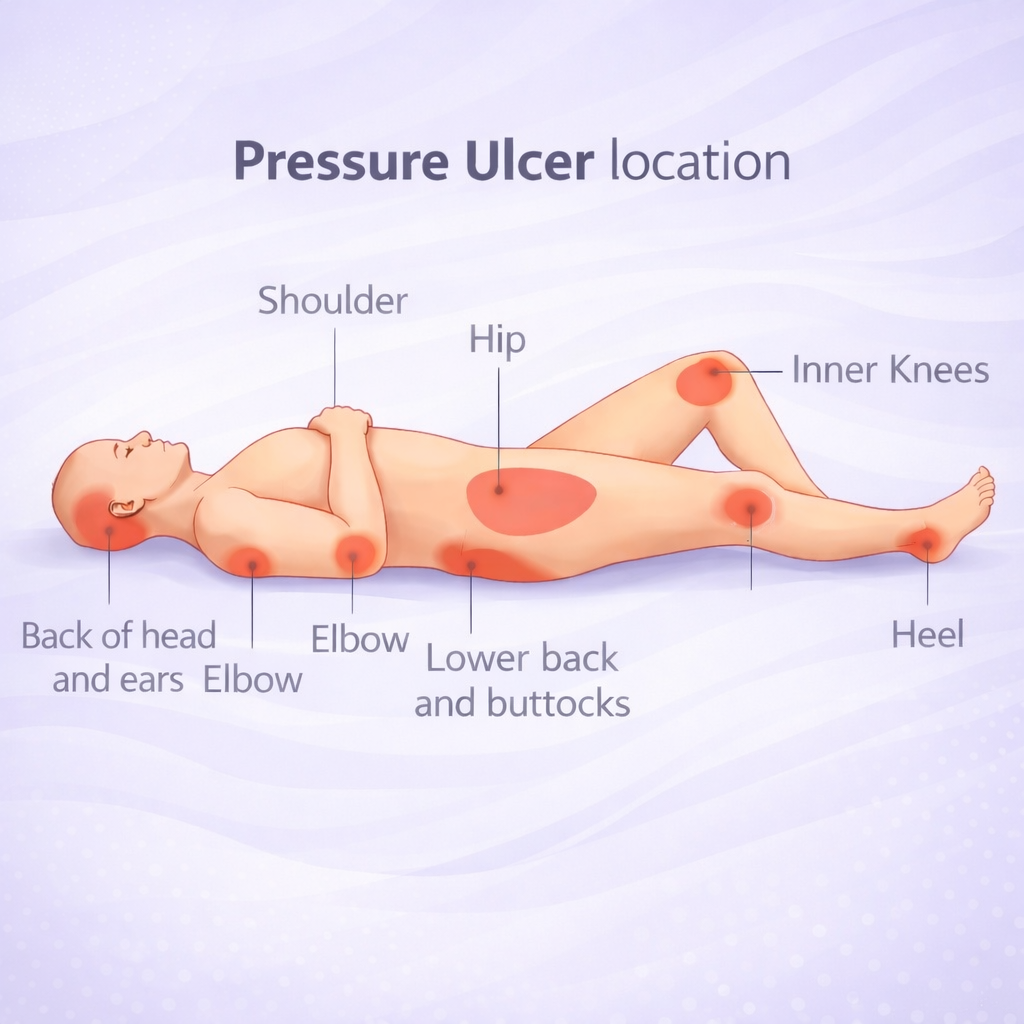
Common risks include pressure ulcers, cardiac events, sleep apnea, airway obstruction from phlegm, and asthma-related complications.
As a result, the care process becomes complex, labor-intensive, and highly unpredictable.


Tech Spotlight
Future of Connectivity
Core Architecture System
AWARE CARE is built as a multi-layer intelligent care system:
1. Sensing & Awareness Layer
- Wearable decubitus and physiological sensors
- Pressure-distribution monitoring mattresses
- Motion, posture, respiration, and micro-movement sensing
2. Perception & Computing Layer
- Multi-modal data fusion
- AI-based risk assessment and anomaly detection
- Continuous digital twin construction for each patient
3. Care Execution Layer
- Adaptive robotic nursing beds
- Flexible rigid-body and fractal pressure-distribution structures
- Automated posture adjustment and pressure redistribution
4. Clinical Coordination Layer
- Intelligent nurse stations
- Remote monitoring and care orchestration
- Collaborative caregiver knowledge systems
Key Capabilities
- 24/7 real-time patient monitoring
- Decubitus (pressure ulcer) prediction and prevention
- Adaptive care responses based on patient condition
- Digital twin visualization and simulation
- Reduced caregiver physical and mental workload
- Standardized workflows with personalized execution